How to Make a Change?

So in this post, I’m going to be talking about how to change something in your life and how I changed my life in moving careers over to marketing.
I’ll be sharing the process behind it, the lessons learned, and how to make an impact using my example when I moved from being in IT and a tech consultant to digital marketing.
By sharing my experience I’m hoping it can be of use to people out there who just need to find an answer or just some clarity around how to actually make that change or transition from one career to another. So if you’ve been thinking about it or sitting on the idea for a long time hopefully this example can help. Hopefully, it can help you make that decision.
How do I change careers – this is a broad problem!
A lot of people always think about changing careers either because they’ve made the wrong decision, they’ve discovered an interest elsewhere or simply because the profession they chose isn’t exactly what it was back in the day, maybe it’s no longer the same, it no longer feels the same and feels different.
According to the career change statistics, the average person changes their careers around 5 to 7 times during their working life.
This is incredible! 5 to 7 times? Really? Just because they either didn’t find it comfortable, they wanted to make a change or they weren’t enjoying it?
Almost everywhere there will be different people who have different circumstances, where they are involved in something but want to change it, they just don’t know how to. There are many reasons someone may want to change something.
Perhaps they want to change careers, things with their business, completely revamp something they are currently working on in a project due to frustration, or simply want to make a transition from something that’s always almost the status quo and want to try out something new.
Hopefully, they can use the principles from my example that I’m about to go into and try to make that change.
If you’re one of those people, you need to understand that there are loads of other people doing this out there, it’s not just you. If you are one of those people who wants to change something in your life then know it’s possible and it’s not impossible, and hopefully, this experience will show you that.
Anyway, let’s get into it…


What was my experience and my process?
For those of you that don’t know already, I was an ex-IT guy. I went from being an IT and Desktop Analyst to being a Tech Consultant and now I’m a Digital Marketer.
I always wanted to get into consultancy where I was in the IT-sphere – supporting technology, that sort of thing, and from the end of that leading into Project Management. And that was the dream or goal – whatever you want to call it.
I just knew I liked computers. I spent most of my time in school playing football, playing at the park, hanging out with friends and obviously ‘trying to study’ but it was one of those things that you wouldn’t really give much thought to. You wouldn’t go to explore different areas or you won’t have that experience to do so easily. You get told early on to go and pick a few paths and subjects and then that’s it you’re on your way and you have to go and do that.
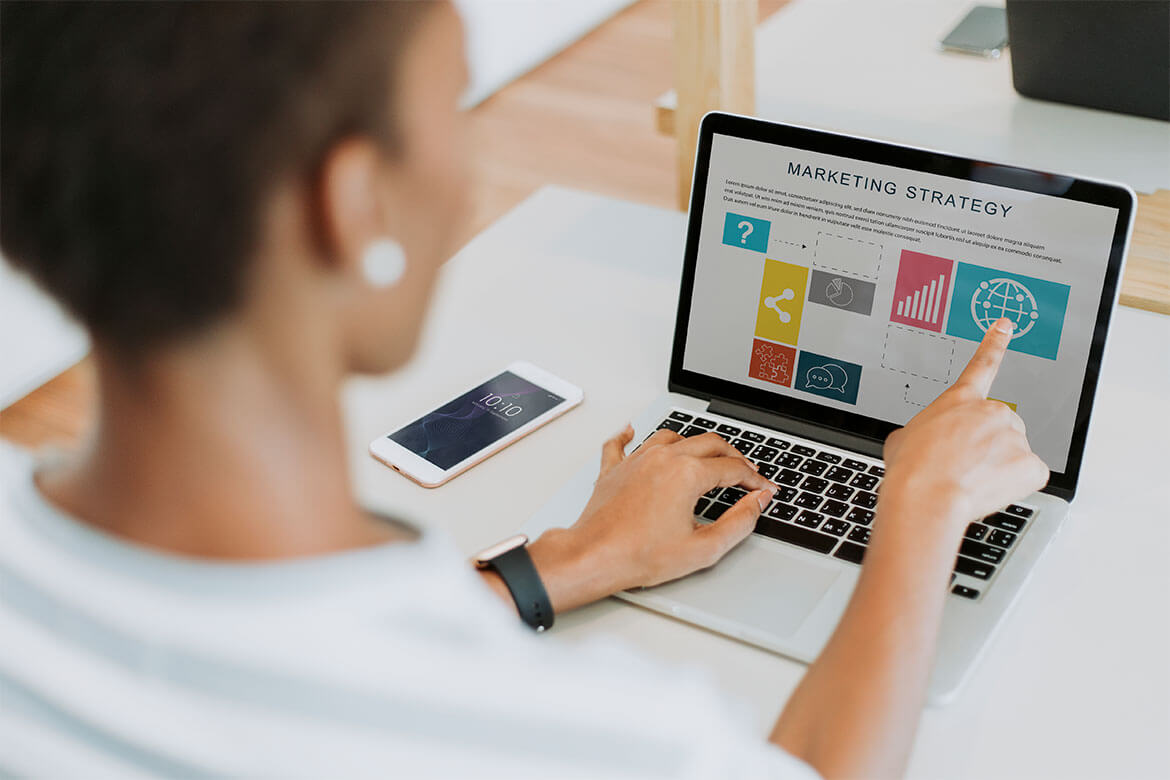
Picking the Computer Science route
For me, though it was relatively smooth so right up until going to university – I did Computer Science so first and the second year went by and the third year was where I had to get a placement. The process for me was pretty smooth! I was good at it so I managed to get my placement job where I spent my time working as an IT Analyst for a year and a bit. After graduating I was on the path to being a support analyst and a technical consultant straight away.
So I was good, I mean really good and things were going pretty well for me…until they weren’t. There was doubt, there was void and something was just missing you know?
On top of that, I and an ex-girlfriend had decided to go our own ways which were for the best and kind of a driver for me and for the things to come, but that’s a long story so it’s something we can dive into another time.
The role was great, the company was great, the people were great and the money was great! Being from an Indian family it was one of those paths that were stereotypically ‘fixed’. You’re going to have your job and you’re going to keep at it consistently and work upwards.
Anyway, the role got repetitive, it felt like a chore and I asked myself; what is going on, is this it, is this really me?
I started to reflect! Reflection is actually a key skill and I’m going to go into why it’s so important.
Why is reflection important?
Well, let me say this: you won’t know till you try something.
During those times and this is still probably a thing in all honesty, but it’s quite prestigious for Indian families to go and say: ‘you should go get a master’s degree or a PhD’, and it almost seems prestigious and almost seems like it has that vanity feel to it, you know what I mean?
I thought to myself that I always wanted to get a master’s degree to some extent, but I wasn’t sure what it would be in. I didn’t want another master’s degree in Computer Science simply because I think I was just done. I wouldn’t enjoy it, I knew it straight away because I’ve already seen and felt like what it was like and how it got repetitive and to be honest, a lot of the job specs out there were also quite similar.
Some people said don’t do it! I had a few conversations with people and some said:
“Just don’t do it!”
“Master’s just does not have value in it anymore!”
I didn’t listen! The reason why is because their circumstance was not the same as mine. I was in a completely different headspace, I was a completely different person, and it’s not their life, right? It was my life and I wanted to win! They didn’t have the full picture that I had.
I wanted something complementary, something creative and I wanted to always bridge the gap between technology and marketing, and the reason why I say marketing? Why I just inserted ‘marketing’ here into the story out of the blue right now I’ll cover in a second.
I got a little taste of it in university and it was in a marketing module, it was about marketing a tech product. Little did I know that taste I had got had lingered over time and it stuck with me subconsciously.
When reflecting and going back to a certain thought or feeling I had got that was unique, I found it brought me to that first taste of marketing. It was exciting! I remember getting the chance to discuss features, benefits, UVPs (unique value proposition). By the way, a hint for those that are in marketing out there should be in reverse when talking about those things.
Anyway…I felt back then that it would help me get into it but I guess I felt a little guilty because I already came this way, I was always already going through my university years on the undergrad.
I did think about it back then to explore it but you can’t just switch courses. It’s not just something you can do as you pay money for a course and there’s a lot of other factors involved with that. I thought I’d ride through it and just think about it later, and I kept it in my mind over time but I remember that I was constantly talking about it during conversations and saying “it would be cool to marketing”. It just kept coming up.
I felt guilty even back then when I was working and doing well in the IT field. I felt guilty about what I worked hard to create, what I worked hard to achieve and asked myself whether I was just throwing it away, whether I had it too good, what the reason was for me to leave and put it aside.
That guilt took over me and there I didn’t know what to do, there was a lot of confusion.
How did I overcome guilt?
This is something a lot of people would want to overcome if they are stuck having the same feelings and thoughts.
I was asking myself; “How do I get to do what I want, how do I take control?”
This is probably underplayed by a lot of people but research and planning are super important.
When I went ahead with making that change I first reflected on all the experiences. I literally went back in time to go and find out exactly what I enjoyed and see what I had an emotional tie in with. Then, to overcome that sense of guilt about leaving behind what I actually created, I had to do something to break through, I knew I was losing control.
I started researching into it more and more and by looking deeper into the field and seeing what it’s like out there. I looked at what the job roles were like, and it really did sound like something I wanted to do, something I could do – I got excited about whenever I thought about it.
I asked myself when the last time was that I actually did something for myself.
One of the crazy things when growing up was that although I was doing my own thing like playing football, sports in general, trying to hang out with friends and even playing video games, some of the influence spurred on from family conversations. For example, when your family members ask you what you want to be and you say “I don’t know what I want to be, I haven’t thought about it enough.” You’d be super young and they’d ask you these questions and they even become more specific like:
– Do you want to be a doctor?
– Do you want to be an engineer?
– What type of engineer?
Do you want to be a software or a hardware engineer?
I said I’d want to be a Software Engineer and that’s what got me into the Computer Science route.
I remember through repetition that it just stuck with me and it got wired into my brain, but granted I actually did like IT so I guess there wasn’t any harm there.
Anyway back to it…
I took the first step in trying to confirm my liking towards marketing and so I thought I’d get on a short course, where I’d get a diploma at the end of it and…I absolutely smashed it and most importantly I enjoyed it!
I remember scoring nearly 100%, I think I got 98%. Things started to move…but I still felt guilty, even though I had researched and I was still trying to confirm that I liked marketing.
I still felt guilty of leaving something behind so I disrupted my routine to get a new perspective.
I started getting into the gym properly, I started working out loads and started trying to hit new targets. I said I’ll stay busy, keep researching and playing with the idea.
I just said to myself one day that I’m going to apply. When I applied I just opted to see what happens and that if I get in I’ll just make a decision later since you can always get in and then just turn down the offer.
Then, I wanted to accomplish something greater and going back I remember having a conversation with a friend when we met up and discussed our bucket lists. Climbing Kilimanjaro came up on our bucket lists. It all sort of synced up. Both my friend and I were pumped and decided straight away that we’d do it. We started planning it, thereafter we booked it and then I immediately started training for it.
Next thing you know it became a few friends of us that booked it and on the way back we booked an additional trip to Dubai, it was amazing! The trip itself was awesome but on top of that we wanted to all raise money for charity so we did and managed to raise around just over £4500 for AbleChildAfrica which was a phenomenal effort.
As silly as this sounds, I treated getting to the summit of Kilimanjaro as a condition as to whether I should accept the Masters or not. I started to associate one risk with another.
Because I just graduated from my undergrad and you shift into the working world you tend to be kind of risk-averse – well I was anyway, and so I needed to build momentum and that’s why I set this condition.
Why do you need to build this momentum to make a change?
It’s important that people build momentum by implementing something new or approaching something new in general. You do this by starting up with taking small steps first, then only do you ramp it up to all the big things.
The reason why it was important is because from a mindset perspective people tend to get locked into a routine. A lot of confusion entered my routine and so I was constantly thinking about it. My brain and body got used to thinking about whether or not to take up a master’s degree or not. I just remember that the repetitiveness and that chore-like feeling was getting the better of me so I had to break that and ultimately change my routine.
The gym was the first thing I implemented. I’d always gone to the gym even back when I was at university, but because you tend to go out drinking and hang out with friends more it wasn’t as consistent and it tends to get pushed aside.
I started to take gym pretty seriously, even more so when me and my friends started training for Kilimanjaro which was an incredible experience. And guess what? I got to the top! It definitely wasn’t easy and in-fact some of us in the group were challenged in one way or another, it was pretty crazy!
By the way, for those of you who’ve never been to Kilimanjaro, I highly recommend it, especially if you want to try something new and if you want to be challenged.
Anyway…I connected my rush from getting to the top of the mountain to my master’s decision and created a link between those two.
I just felt like I could do anything and I literally got primed from getting to the top. It was incredible because of the risk that was associated with climbing the mountain. Who knows what could have happened on that mountain. It enabled me to take on more risk – I wanted to take on more risk!
It triggered me to go ahead and say “okay well let’s go do this” and “no more what ifs.”
That’s where things started snowballing.
I literally killed it, I took over the work ethic and the momentum I built up from my tech consultant years and also from getting a high out of summiting Kilimanjaro. I literally started making things happen for me at the end of it and I just couldn’t believe it you know, I graduated with a 1st class Honours, and on top of that I was the top performer across the whole digital marketing course which is incredible and I was surprised by that!
I’m not bragging here right, I’m just saying that the routine I had going during my master’s years, I just carried it over in the sense that I was still going to the gym and my routine had none of that confusion in their, it never had any negativity and was purely a positive mood throughout.
I managed to outperform it to the point where a project I was working on for a business to provide them with a growth marketing strategy for one of their products that they had on the launch line, got me a job presenting that strategy for them.
I took the job and I actually thought that this was it, i’ve made it, i’ve caught up from that time where I was questioning my job and whether to even go back to do master’s degree, and now I’m back and I’ve got a job you know, so that’s it, i’ve made it, I don’t need to do anything else, i’ve caught up.
Things got too comfortable and there were problems in that role which was mainly down to resources, but long story short I was basically happy to leave the role.
When I split off I also reflected on that and it wasn’t just the resources which was the issue, the main problem was that I think I was being naive generally.
I came across Gary Vee, a highly known marketer and I came across one of his videos one evening and he helped me realise some of the bad habits I got into after graduating and getting that job.
I remember I was consuming the wrong content and I didn’t really learn at the same pace that I usually do, I didn’t put in the same effort – I got comfortable and I wasn’t owning my decision to make a change.
This is key, you need to own your decision when you want to make a change, and you need to make sure that you build that solid foundation. In my case, obviously I had I started but the fight and war wasn’t over yet and I still needed to make sure I got to the other side.
So after that role I decided to change things up, I decided to turn things around!
I basically changed my habits AGAIN…and I broke the routine. You are probably seeing a pattern here.
So in my routine, I started consuming the right content and for those of you who are in marketing, you probably know that you should be consuming the right content because to be a digital marketer or in marketing overall you need to be with the cutting edge. You need to be innovative, you need to be implementing, testing and evaluating at all causes and should be finding new ways to grow businesses.
I actually went the extra mile by learning marketing strategies and tactics and then becoming more proactive with what I was learning. I started to test and actually implement where I can and when I can, and even from there I went a few miles more by actually starting to speak a few different business owners in different niches and that too voluntarily, so I can help them find new ways of marketing themselves in order to grow.
This helped me put things into more practice and put things into perspective. I basically got to understand exactly if what I was learning was of use and how powerful the strategies were.
From there I went even further!
I decided to apply for an internship role for 6-months which was basically free, and the reason why I did that is because you tend to have no obligation when something is free and I really wanted to manage the department overall. You get a sense of ownership and authority.
So I put myself forward for it as a way of being able to actually test and implement these strategies in a professional setting. I got to do that for the entire marketing and social media department since I was managing that well. This led me to getting a head of marketing role where I’m tasked with growing the business and the function.
It’s been an incredible journey so far, but I remember I just kept pushing and pushing and I think the main result was that in the end I managed to break through even though I tripped up for a second. I pulled through and made a change within my routine and disrupted my pattern, made a change with a couple of the habits and started to focus again.
One thing I realised is that it’s all about continuous learning and consistency.
You have to continuously put in the effort and the result of that in my experience is that I enjoy it now and that’s what matters most to me!
This is why I thought I’d share this sort of experience because there might be others out there who are looking to see what it could be like on the other side providing you actually keep at it, providing you actually take the risk or make the change or even just weigh out your options if you’re at the very beginning of researching and planning.
CONCLUSION: So you’re probably wondering whether I should have actually made that change and put myself through all that uncertainty and risk?
Yes I should have in fact I would do it again, especially since I now know what I’m capable of achieving (like summiting Kilimanjaro let alone changing careers. By the way…the picture above shows me (on the far right) with my friends – the day we got to the summit!
And if I was to summarise it for people out there and tell you about the principles I’ve learned from this process then it’s that there were four main steps:
1. Research and planning – to confirm whatever it is that you have an interest in or whatever it is that you want to actually get involved in. Build the foundation by making sure.
2. Make a change from a small-scale then moving to a larger scale – helping you break your regular pattern, breaking routine just so you can get a different perspective and so that within the different routines you’re able to then generate new types of ideas otherwise you only have a narrow focus because they’ve been doing something for a long time continuously. You want to be able to free up some room and expand your views over a broader horizon of opportunity and understand how much scope there is. It’s important for you to sit-back, break the routine and get a new perspective on things.
3. Gaining momentum to get that snowball effect and then adding a layer of mindset. You need to make sure that you cannot be phased, you’re unbreakable, focused and most importantly consistent. You’ll get in that pattern where you’re knocking every ball out of the park and getting closer to your goal and be able to implement that major change.
4. You need to be able to take the risk on your shoulders and OWN it. You can find support from other people that do something similar, but the decisions you’ve made for yourself, you need to own it. You need to make sure you reflect on that at every single point to understand if you did go wrong, where did you go wrong? Using reflection here will be very important to get that consistency.
Ultimately you have to make sure that you make it happen, especially if there are other people are talking about it. You need to prepare to have the mindset to put yourself through it in the first place right, and to stay consistent and not be phased by what anyone else is doing or saying. Make sure you stay focused!
If you’ve already hit key milestones and you know it’s going well don’t lose concentration – just keep at it! My example here as mentioned earlier was that at one point I was running and tripped over that rock at one point, but I got back up and kept running uphill. The more I kept running the more I found ways to actually jump over the next rock and avoid it the next time.
This is how you grow as a person, if you’ve achieved one goal you simply want to move onto the next!
You’ve got to constantly ask yourself…what’s next?
This is the biggest question in any field even for people who are enjoying their current field.
So you can take any of these principles away and put them towards anything, of course adapting them to your particular context and circumstances.
It’s always going to be continuous experimenting, testing, implementing and evaluating – it’s a continuous cycle.
Don’t ever say no straight away, maybe dip your toes into something so that you can actually understand what it’s like and then go ahead and make a decision, rather than just right off the bat saying yes or no. It’s good practice.
Anyway I hope that sharing my experiences just now will help you find clarity in what you’re doing, that it will help to improve your processes and help you find different ways on how you can make an impact and change in your life.